At the end of April 2026, the BSI published updated guidance on workplace first aid provision through BS 8599-1:2019+A1:2026. The revised standard expands beyond the contents of workplace first aid kits to include guidance on the provision of Automated External Defibrillators (AEDs) in the workplace.
The updated standard also introduces guidance on burns first aid kits and eye wash kits, providing employers with recommendations on their contents and how many kits should be available in both low-risk and high-risk workplaces.
Key Changes in BS 8599-1:2019+A1:2026
- New guidance on workplace AED provision
- Introduction of burns first aid kits
- Introduction of eye wash kits
- Clarification that provision should consider all persons on site, including visitors and contractors
General Workplace First Aid Kits
The number and size of first aid kits required in a workplace should be determined by both the number of people on site and the level of risk associated with the work environment. This requirement now extends beyond employees and includes visitors, contractors, and any other persons who may be present on site.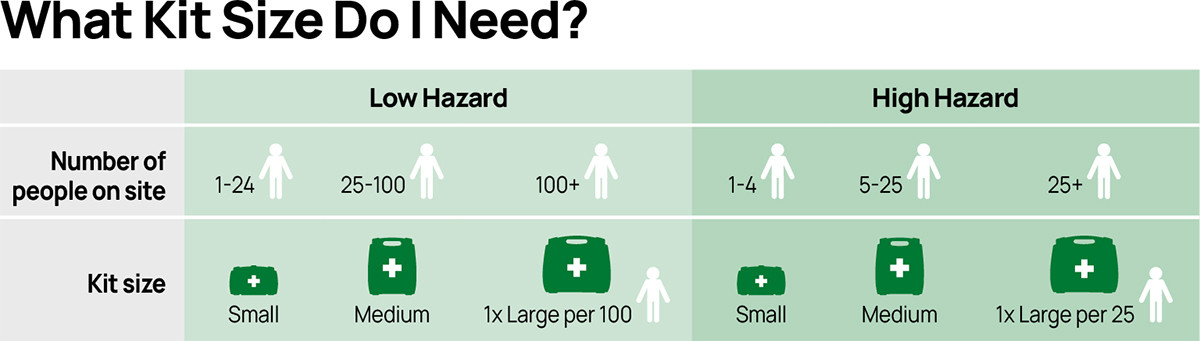
First aid kits should be stored in containers that are large enough to hold all required contents and capable of being securely closed. This helps maintain a clean, dustproof, and protected environment for the supplies.
The container should be clearly and durably marked with:
- The number and date of the relevant standard
- The symbol of a white cross conforming to BS EN ISO 7010:2024+A8:2024, type E003
- The words “First Aid” in white text
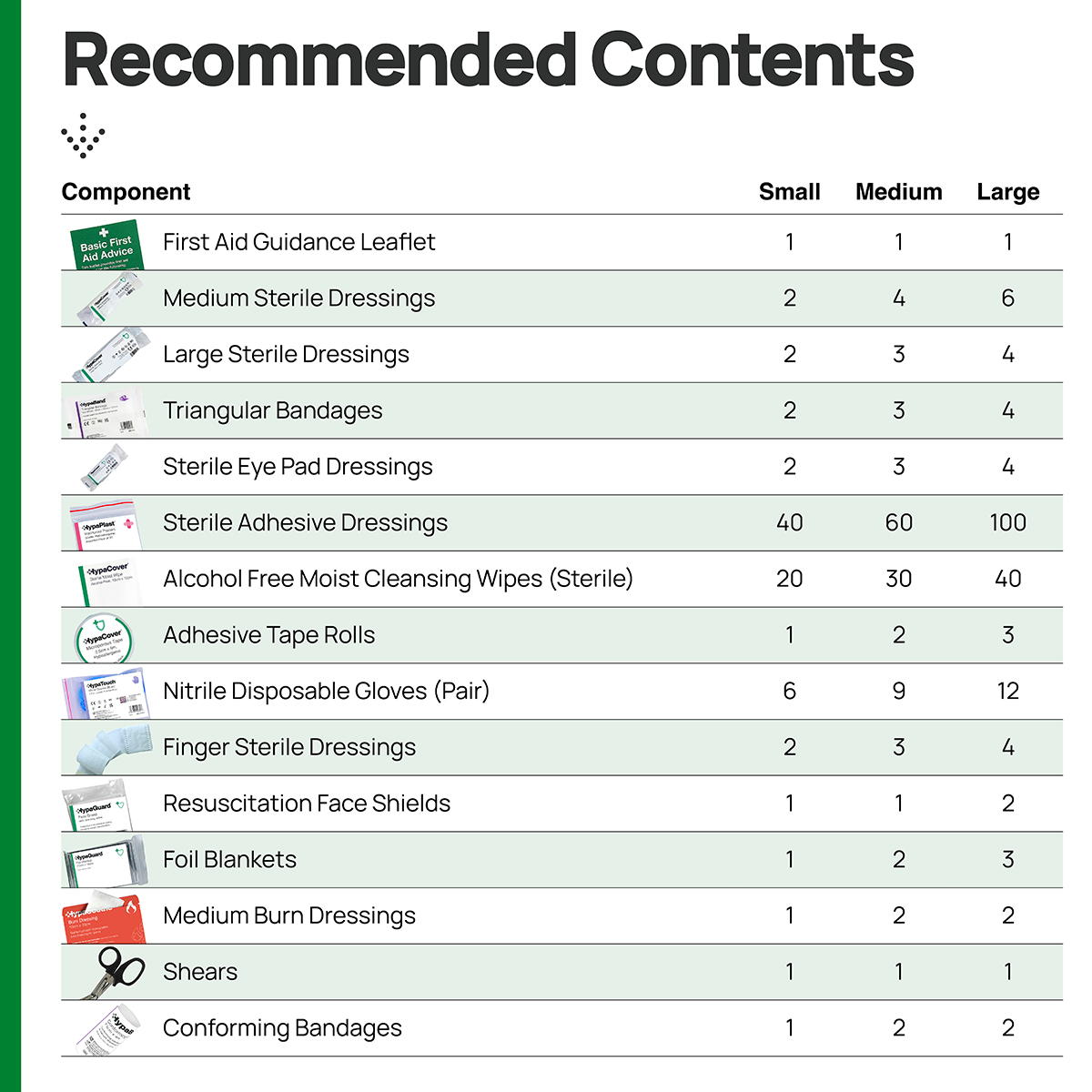
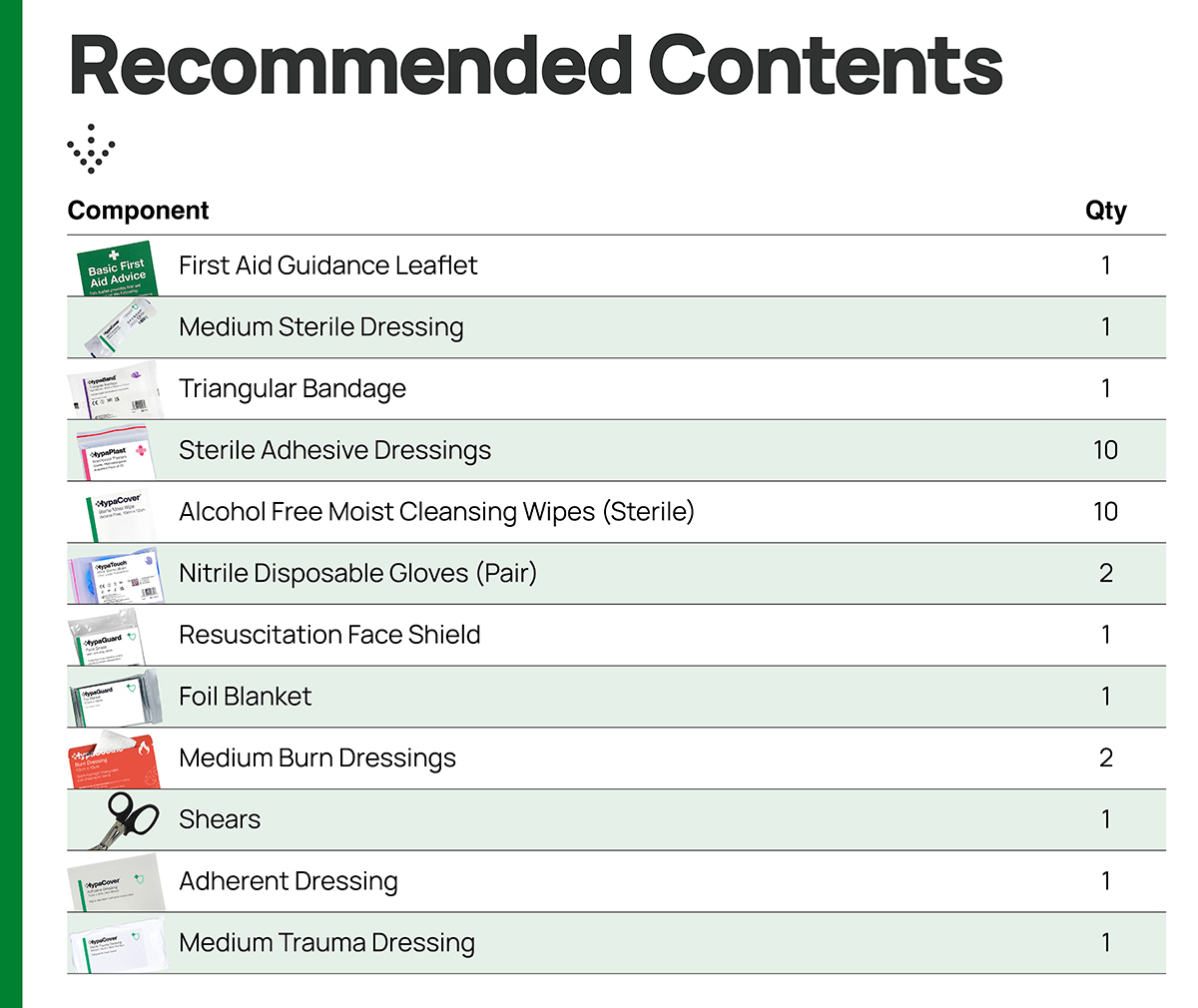
While the recommended contents of workplace first aid kits remain broadly consistent regardless of kit size, the quantity of individual components is adjusted to reflect the number of people covered and the level of risk present. Larger workplaces and higher-risk environments will typically require greater quantities of first aid supplies to ensure adequate provision.
Travel and Motoring First Aid Kits
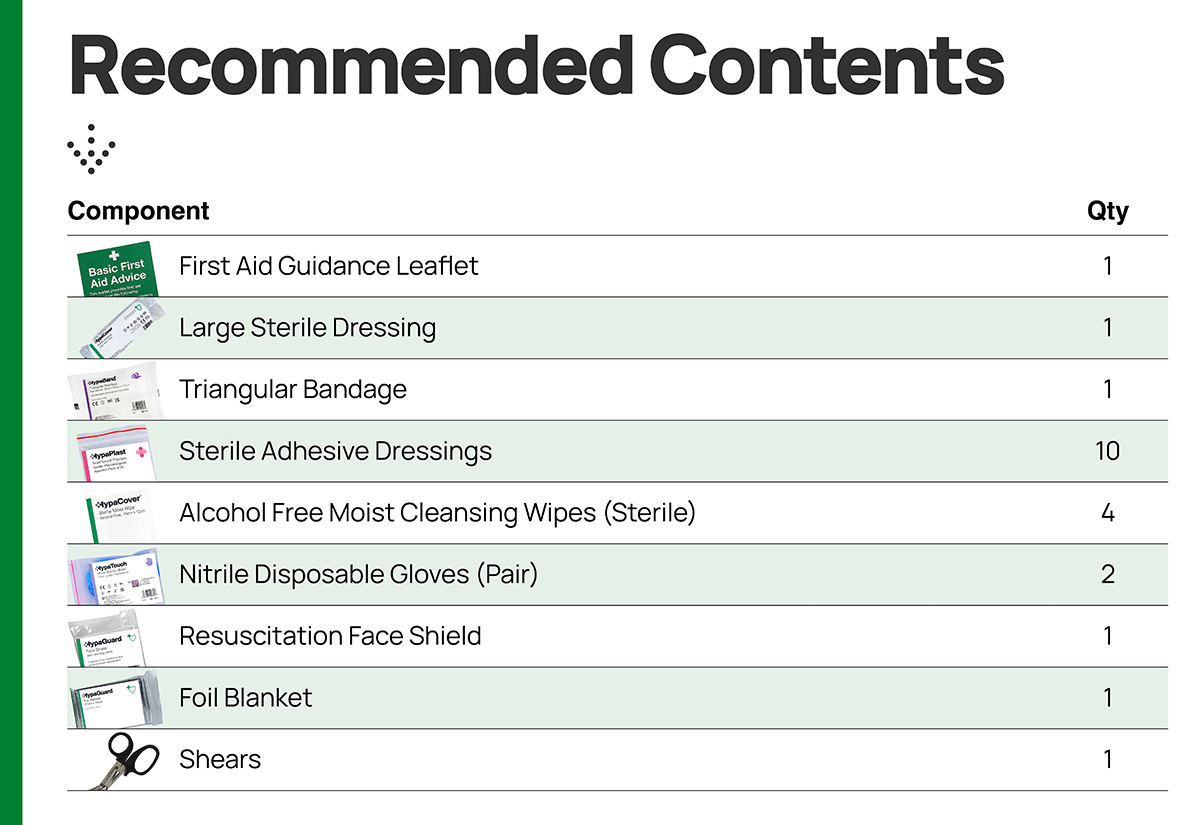
The British Standard recommends that company vehicles should be equipped with a travel and motoring kit. This may include cars, vans, tractors and other work vehicles.Travel first aid kits should be stored in containers that are large enough to hold all required contents and capable of being securely closed. This helps maintain a clean, dustproof, and protected environment for the supplies.
The container should be clearly and durably marked with:
- The number and date of the relevant standard
- The symbol of a white cross conforming to BS EN ISO 7010:2024+A8:2024, type E003
- The words “First Aid” in white text
Personal Issue Kits
Workplace personal issue first aid kits are intended to be issued to individual employees as a supplementary resource alongside small, medium and large workplace first aid kits. These are ideal for workplace first aiders.Personal issue kits should be stored in containers that are large enough to hold all required contents and capable of being securely closed. This helps maintain a clean, dustproof, and protected environment for the supplies.
The container should be clearly and durably marked with:
- The number and date of the relevant standard
- The symbol of a white cross conforming to BS EN ISO 7010:2024+A8:2024, type E003
- The words “First Aid” in white text
Critical Injury Kits
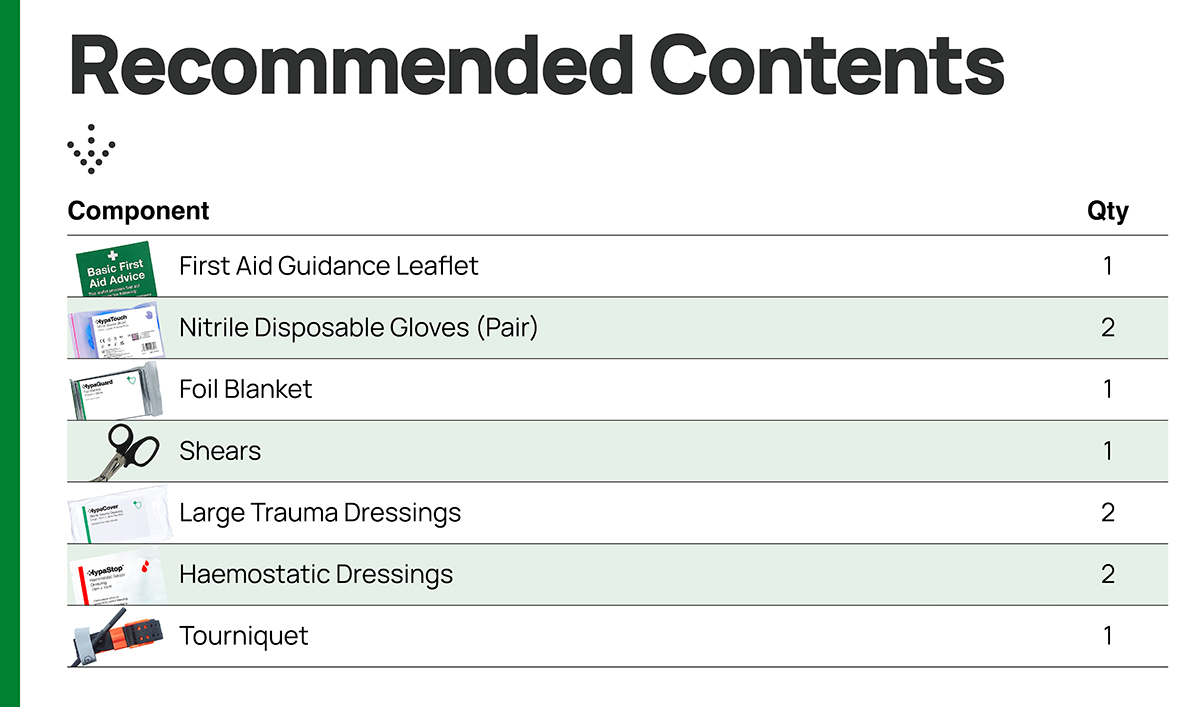
Critical injury kits are intended to supplement general workplace first aid provision in environments where there is a risk of severe traumatic injury. They contain equipment designed to manage life-threatening blood loss, including tourniquets, trauma dressings and foil blankets.According to the British Standards Institute, organisations should provide an appropriate number of kits based on their first aid needs assessment and the maximum number of people likely to be on site at any one time. Employers may also choose to hold additional kits to help respond to injuries affecting employees or members of the public during acts of terrorism or other mass casualty incidents.
Burns First Aid Kits (New Addition)
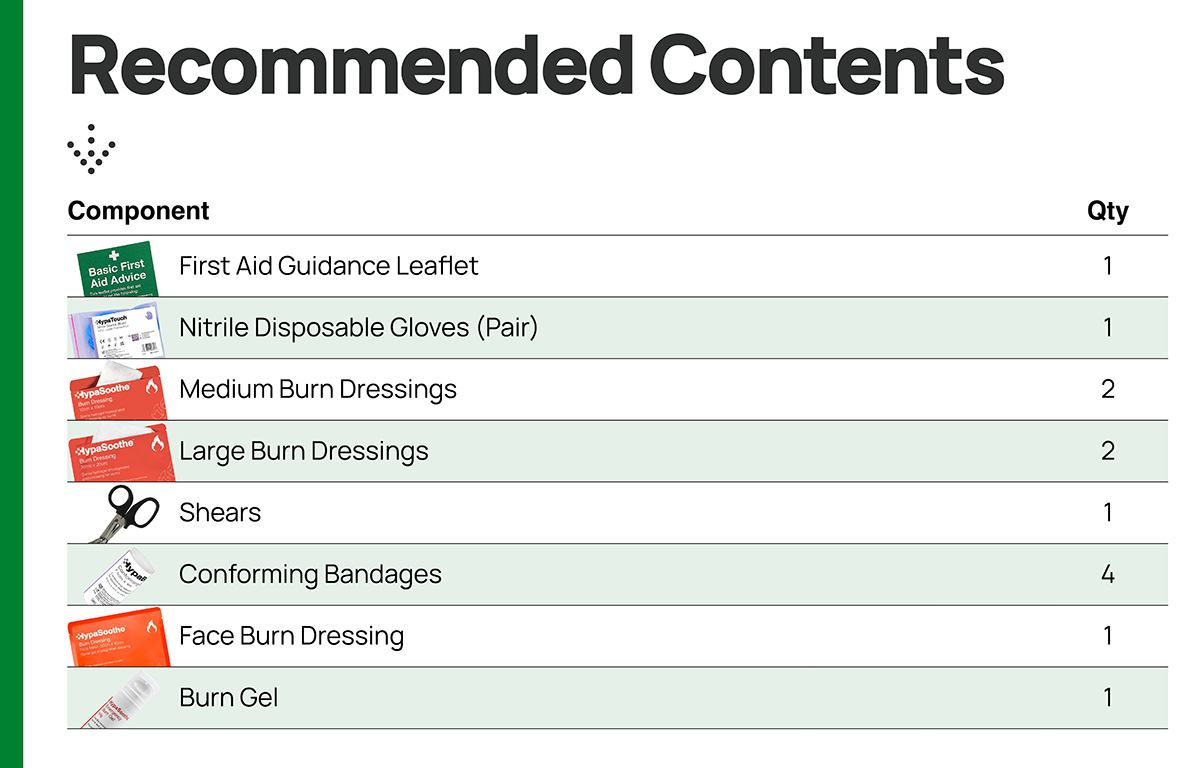
The updated British Standard introduces burns first aid kits for workplaces where a higher risk of burn injuries has been identified.These kits should contain burns dressings that can be used when immediate access to 20 minutes of running water is not available, or where existing facilities do not allow water to be easily applied to the affected area.
As with other workplace first aid kits, burns kits should be stored in suitable containers that are large enough to hold all required contents and can be securely closed. Containers should be clearly marked with the first aid symbol and the word "Burns", or an appropriate burns-specific symbol, to ensure they can be quickly identified in an emergency.
Eye Wash First Aid Kits (New Addition)
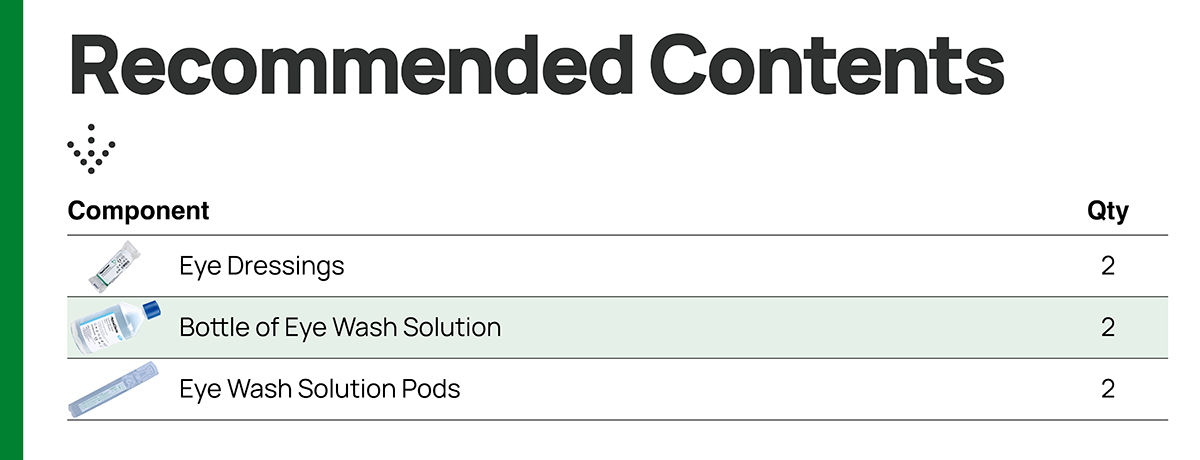
Wherever a risk to eyes has been identified in a risk assessment, employers should provide eye wash first aid kits according to the most recent British Standard.It is recommended that in low-risk environments one eye wash kit should be provided per medium or large first aid kit provided and with any workplace first aid kit in a high-risk environment. It is also important to consider supplies to deal with potential chemical risks on site, such as having cleaning chemicals in the vicinity.
Automated External Defibrillators (New Addition)
The updated guidance places greater emphasis on fast access to life-saving equipment in the event of a cardiac arrest.For workplaces with 5 or more people on site during operating hours, it is expected that an AED is made available and clearly displayed in a cabinet or wall-mounted unit. Not only do they need to be accessible within 2 minutes from all areas of the workplace, but where possible, they should also be made available to the public.
For more information on the British Standard AED update, read this blog: New British Standard for AEDs.
What Are We Doing to Support This Change?
We pride ourselves on keeping abreast of legislation and guidance updates, continually evolving our product offering to provide the very best first aid solutions.With that in mind, we’re pleased to have introduced a new range of AED cabinets and accessories designed to complement the Mindray AED and help businesses stay compliant with the new standards. We are also working on adding additional components to both our eye wash and burns first aid kits to provide British Standard options for our customers.
What Workplaces Should Do Next
To ensure that they comply with the updated recommendations in BS 8599-1:2019+A1:2026, workplaces should review their first aid needs assessments. Particular attention should be given to the provision of AEDs, burns first aid kits and eye wash kits, as well as whether there are currently sufficient first aid supplies available for all employees, contractors and visitors.By reviewing first aid arrangements now, organisations can improve emergency preparedness and help ensure a faster response when incidents occur.
Contact Us Today

Talk to us about opening a trade account today. Call us on 0208 202 7447 or email sales@safetyfirstaid.co.uk. Alternative;y, submit the form below.
By Sarah Mason